
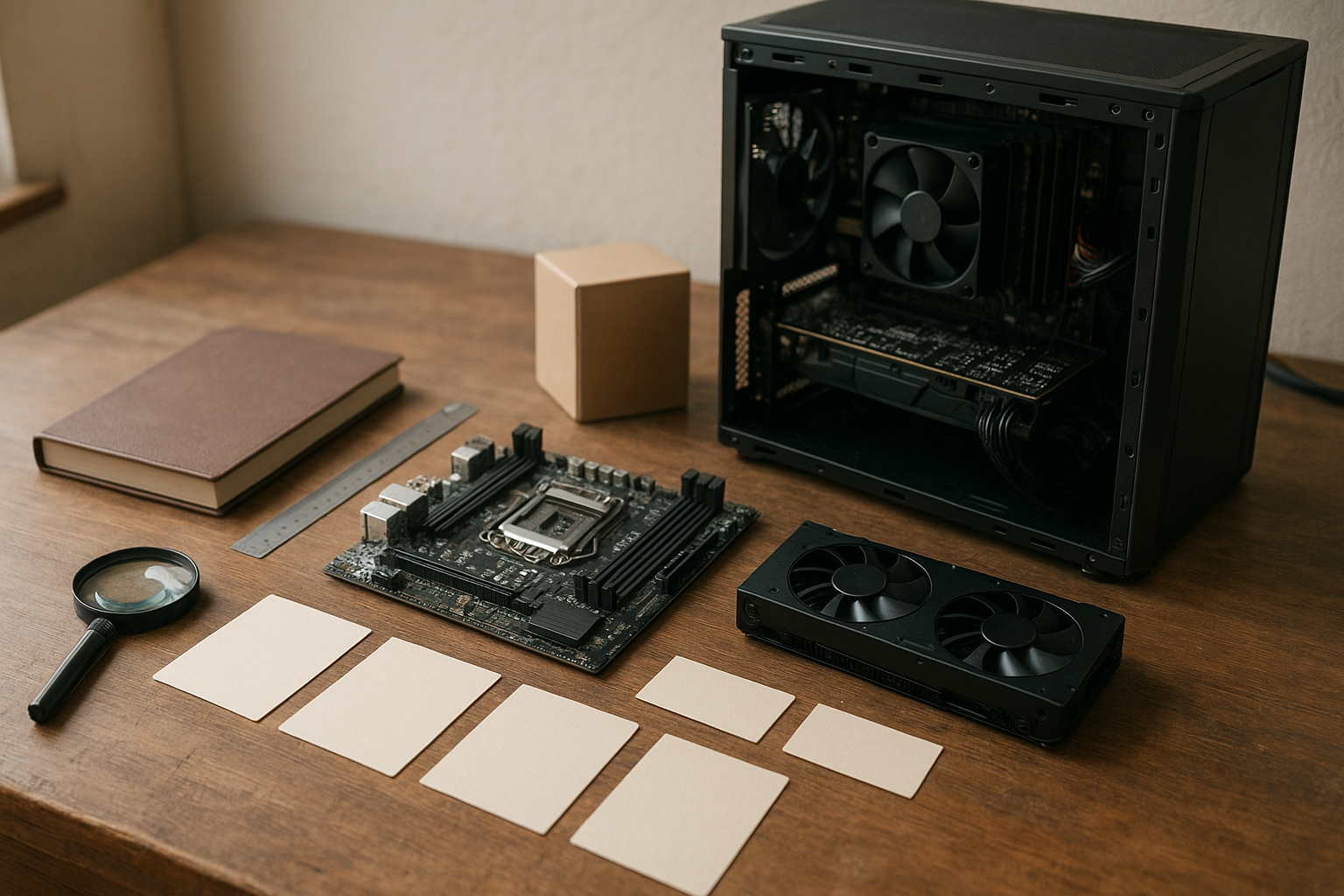
The 2026 PC Awards finalists should give readers a clearer way to compare the computers, components and accessories that matter most this year. But a finalist list is only useful when every product, category and judging claim can be traced to an official awards announcement or a manufacturer-confirmed product page.
The source material available for this article does not include a verifiable nominee roster or an official category-by-category announcement. Rather than inventing shortlisted CPUs, GPUs or complete systems, this guide explains how to read and verify the PC awards shortlist 2026, what each major category typically measures, and how to make a practical buying decision once the confirmed products are published.
Table of Contents
2026 PC Awards finalists at a glance
A complete awards article should identify three things for every entry: the exact product name, the category in which it was shortlisted, and the publication or organization responsible for the judging. Without those details, a list can confuse a product family with a specific model or mistake a recommended product for an actual finalist.
At the time of writing, the supplied information does not provide an official, independently verifiable roster for the 2026 PC Awards finalists. The table below therefore separates the information a reliable shortlist should contain from claims that should not be made without a primary source.
| Information readers need | Why it matters | What to verify |
|---|---|---|
| Exact model name | Performance and features can differ substantially within one product family. | Model number, generation, memory configuration and regional variant. |
| Award category | A product may be strong for value but unsuitable for a performance-focused category. | The official category title and the wording used by the judges. |
| Finalist status | Being reviewed, nominated or recommended is not necessarily the same as being shortlisted. | An awards announcement or official editorial page. |
| Evaluation period | PC hardware changes quickly, especially GPUs, CPUs and laptops. | The eligibility dates and publication date of the awards. |
| Regional availability | A product available in one country may be unavailable or differently configured elsewhere. | Manufacturer and retailer listings for the reader’s market. |
This distinction matters especially for searches such as “best desktop PC finalists” or “2026 graphics card finalists.” A search result, social post or retailer page may mention a product alongside an award without proving that it reached the final shortlist.
What the 2026 PC Awards finalists label should mean
In a properly sourced awards article, “finalist” means the product remains in contention within a named category. It does not automatically mean that the product is the fastest, cheapest or best choice for every buyer.
For example, a compact desktop might be shortlisted for its efficiency and upgradeable design, while a larger workstation earns recognition for expansion and sustained performance. Comparing them only by headline benchmark speed would overlook why they were selected.
Readers should also distinguish an award finalist from a buying recommendation. A finalist list is a useful discovery tool, but it does not replace checking current pricing, warranty coverage, software support, noise, power requirements and local stock.
How to verify the PC awards shortlist 2026
The safest way to confirm the PC awards shortlist 2026 is to start with the awards publisher or event organizer, then cross-check each product against the manufacturer’s documentation. This reduces the risk of repeating an outdated model name, a regional configuration or an unsupported performance claim.
- Find the primary awards announcement. Confirm the publisher, publication date and complete category list.
- Record the exact finalist names. Include the full model number rather than shortening a product family name.
- Check the product’s official page. Verify processor, graphics, memory, storage, ports and availability.
- Separate editorial evidence from marketing claims. A manufacturer’s specification page can confirm features, but it does not independently prove an award or ranking.
- Check regional differences. Laptop displays, keyboards, power adapters, warranties and component configurations may vary by country.
- Add an update date. Readers need to know whether the shortlist reflects the current awards cycle.
Official technical references are useful for checking terminology. Intel publishes processor information through its processor product pages, AMD maintains its Ryzen desktop processor catalogue, and NVIDIA provides specifications through its GeForce graphics card pages. These sources verify hardware details, not the editorial decision to shortlist a product.
Why product names need careful checking
Manufacturers often sell several versions of a similar product. A gaming laptop may be available with different GPUs, displays, memory capacities and thermal limits. Likewise, a graphics card name may describe a GPU family while the board partner changes cooling, factory settings and physical dimensions.
A useful shortlist should therefore avoid vague entries such as “the latest Ryzen laptop” or “a GeForce RTX model.” Each entry should identify the exact machine or component that judges evaluated. If the tested configuration is unavailable to readers, the article should say so rather than implying that every retail version performs identically.
PC awards categories explained
The precise PC awards categories depend on the organizer. The sections below describe the main category types readers are likely to encounter and the questions that make comparisons fair. They should not be mistaken for a confirmed 2026 awards roster unless the organizer publishes those category names.
Best desktop PC finalists
The best desktop PC finalists should be judged as complete systems, not solely by processor speed. Important factors include cooling, acoustics, upgrade access, power-supply quality, graphics performance, storage, warranty and the balance between the advertised configuration and its price.
- Gaming desktops: assess frame-rate consistency, graphics settings, noise and future upgrade options.
- Creator systems: consider sustained CPU performance, GPU acceleration, memory capacity and fast storage.
- Small-form-factor PCs: check thermal limits, replaceable parts, port selection and proprietary components.
- Workstations: look for validated software support, expansion capacity, reliability features and professional GPUs where relevant.
Buyers should not choose a desktop solely because it includes a high-end graphics card. A weak power supply, restricted airflow or single-channel memory can undermine an otherwise attractive specification.
2026 gaming laptop finalists
The 2026 gaming laptop finalists require a broader assessment than a desktop replacement. A laptop’s GPU performance depends on its configured power limit and cooling system, while the display determines how much of that performance the owner can actually see.
Check the following details before deciding which model is the better finalist for your needs:
- Screen resolution, refresh rate, response behaviour and variable-refresh support.
- GPU power configuration, cooling design and whether performance changes on battery.
- CPU performance under sustained workloads rather than short bursts.
- Memory and storage upgrade options, if any.
- Battery life for ordinary work, weight, charger size and port placement.
- Keyboard, trackpad, webcam, speakers and warranty service.
A thick gaming laptop may be the better choice for long rendering sessions because it can sustain performance more effectively. A lighter machine may suit students and frequent travellers, even if it gives up some peak speed.
2026 graphics card finalists
The 2026 graphics card finalists should be compared at the resolution and settings their intended owners will use. Raw performance is only one part of the decision: upscaling quality, ray-tracing capability, video encoders, memory capacity, power draw, driver support and physical size all affect the result.
When comparing shortlisted GPUs, ask:
- Is the card intended for 1080p, 1440p, 4K or professional workloads?
- Does its memory capacity suit the games or applications being considered?
- Will the card fit the case and work with the existing power supply?
- Are the required display outputs and media features present?
- Does the buyer value lower noise, lower power use or maximum frame rates?
There is no universal winner. A card that offers excellent value at 1440p may not be the right option for 4K ray-traced gaming, while a high-memory model may be more useful for content creation than for a typical esports setup.
Shortlisted CPUs and GPUs
“Shortlisted CPUs and GPUs” can refer to component categories, or to the parts inside nominated desktops and laptops. Those are different comparisons. A desktop processor should be evaluated alongside its motherboard, memory and cooling requirements; a mobile processor should be judged within the laptop that contains it.
For CPUs, compare application performance, gaming performance, platform longevity, integrated graphics, power behaviour and cooler requirements. For GPUs, compare workload performance, memory, software features, efficiency and total system cost rather than the component’s name alone.
Best PC components 2026
A components category may include motherboards, solid-state drives, memory, power supplies, cases, cooling systems and peripherals. These products rarely win on a single specification. A power supply, for instance, should be assessed for capacity, electrical performance, protections, efficiency certification, connectors, warranty and suitability for the intended system.
Storage finalists deserve the same care. Sequential transfer figures do not describe every workload, and an SSD’s sustained performance, controller behaviour, endurance policy, thermal management and software support may matter more for a workstation than a short benchmark result.
How to compare the finalists
The most useful way to read the 2026 PC Awards finalists is to build a shortlist for your own use case. Start with a fixed requirement, then eliminate products that fail it before weighing subjective preferences such as design or brand familiarity.
| Buyer priority | Evidence to compare | Common mistake |
|---|---|---|
| Gaming | Performance at the target resolution, frame-time consistency, display quality and cooling. | Comparing GPU names without checking laptop power limits or desktop airflow. |
| Video and 3D work | Sustained CPU/GPU workloads, memory, storage speed, application support and noise. | Using a short gaming benchmark as proof of workstation performance. |
| Office and study | Keyboard, webcam, battery life, reliability, upgradeability and support. | Paying for peak graphics performance that will not be used. |
| Small spaces | Dimensions, acoustics, external power brick, port selection and serviceability. | Assuming a smaller enclosure is automatically quieter or easier to upgrade. |
| Long-term ownership | Warranty, repair access, driver support, replaceable storage and memory. | Choosing on launch specifications without checking future maintenance. |
Use total system cost, not the headline component
A component may look affordable until the rest of the system is included. A powerful graphics card can require a larger case, a stronger power supply, additional cooling and a higher-resolution monitor. A high-end desktop CPU may also need a capable cooler and a motherboard with suitable firmware support.
For laptops, include the cost of a dock, external display, storage expansion or memory upgrade if the original configuration will not meet the buyer’s needs. This provides a realistic ownership cost and prevents a low starting price from distorting the comparison.
Consider limitations as part of the award decision
Every finalist has trade-offs. A transparent article should state them directly instead of presenting an award label as a blanket recommendation.
- High-performance desktops: usually offer stronger sustained speed, but they occupy more space and may consume more power.
- Gaming laptops: combine portability with performance, but upgrades, battery life and acoustics can be limited.
- Small PCs: save desk space, but compact parts and proprietary designs may restrict repairs.
- Premium components: can provide better features or longevity, but their value depends on the workload.
This is also why awards results should not be turned into a rigid ranking without context. The “best” finalist for a frequent traveller may be a poor choice for someone building a quiet workstation, even when both products were recognized in the same overall awards program.
Recommendations by buyer
Until a confirmed roster is available, the following decision paths are more useful than guessing which product will win. They can also help readers interpret the final results when the official PC hardware awards finalists are named.
Choose a desktop finalist if you value performance per dollar and upgrades
A desktop is usually the better starting point for buyers who already own a monitor, need replaceable components or expect to upgrade the graphics card later. Look for standard parts, accessible internals and a power supply with appropriate headroom.
Avoid a desktop finalist if you move between locations frequently or lack a suitable workspace. In that situation, the additional cost of a laptop may be justified by its integrated display, battery and portability.
Choose a gaming laptop finalist if portability is a real requirement
Gaming laptops make sense for students, travelling professionals and households where one machine must serve several rooms. Prioritize the display, keyboard, weight and sustained cooling instead of choosing the model with the largest advertised GPU.
Buyers who rarely travel should compare a laptop’s price with a desktop and monitor. A desktop may provide easier maintenance and stronger long-session performance for the same overall budget.
Choose component finalists when you already have a suitable platform
Upgrading one component can be more efficient than replacing a complete PC. Before buying, confirm socket or interface compatibility, physical clearance, firmware support, connector requirements and whether another component will bottleneck the upgrade.
Do not replace a working component merely because it appears on an awards shortlist. The upgrade should solve a specific limitation, such as insufficient storage, poor graphics performance, inadequate memory or excessive noise.
Key Takeaways
- A reliable finalist list must name the exact product, category, judging publisher and awards cycle.
- The supplied source does not include a verifiable official roster, so specific 2026 product names should not be presented as confirmed finalists without further evidence.
- Graphics cards should be compared by workload, resolution, memory, power, size and software features—not just model family.
- Gaming laptops require attention to GPU power limits, cooling, display quality, battery life and upgradeability.
- Desktop awards should consider the complete system, including the power supply, cooling, acoustics, warranty and serviceability.
- Use finalist status as a starting point, then check current configuration, price and regional availability before buying.
Frequently Asked Questions
What are the 2026 PC Awards finalists?
A confirmed answer requires an official category-by-category announcement from the awards publisher. The information supplied for this article does not include a verifiable finalist roster, so specific product names should not be presented as confirmed entries. Readers should check the organizer’s original announcement and ensure that each model number, category and awards date match the published source.
Where can I find the PC awards shortlist 2026?
Start with the official website or editorial page of the organization running the awards, rather than a retailer listing or social-media summary. A trustworthy shortlist should show the categories, exact product names and finalist status. Manufacturer pages can then confirm specifications, but they cannot independently establish that a product was shortlisted.
Are the 2026 graphics card finalists the fastest GPUs available?
Not necessarily. Awards finalists are selected within an editorial framework that may consider value, efficiency, software features, design, availability or innovation in addition to speed. The right comparison depends on resolution, applications, power supply, case clearance and budget. A finalist designed for efficient 1440p gaming may be a better practical choice than a faster but more expensive card.
How should I compare the 2026 gaming laptop finalists?
Compare the complete laptop configuration, including the GPU’s power limit, CPU, memory, display, cooling and storage. Also check battery life, charger weight, keyboard quality, webcam, ports, warranty and upgrade access. Two laptops with the same GPU name can perform differently because their thermal designs and power settings differ.
What makes a good best desktop PC finalist?
A strong desktop finalist should balance performance with cooling, acoustics, component quality, upgrade access and support. Check whether the power supply is suitable for the installed GPU, whether the case has adequate airflow and whether memory and storage can be replaced. A high specification is less valuable if the system is noisy, difficult to service or restricted by proprietary parts.
Should I wait for the awards winners before buying a PC?
Wait if the purchase is flexible and the award announcement is close, because the results may highlight useful alternatives or reveal a category winner worth considering. Do not delay an essential purchase solely for an award badge. Compare current prices, stock, warranty and your actual workload; a discounted finalist may offer better value than a newer winner.
Does finalist status guarantee good value?
No. Finalist status indicates recognition within a particular awards process, not a universal price guarantee. Value changes with discounts, regional pricing, bundled software, warranty terms and the buyer’s requirements. Treat the shortlist as a way to identify products for closer research, then calculate the total cost of the system or upgrade you actually plan to use.
Conclusion
The 2026 PC Awards finalists can provide a useful starting point for researching a desktop, laptop or component, but only when the shortlist is accurately sourced and evaluated in context. Exact model numbers, category definitions, configuration differences and ownership costs matter more than a promotional award label.
Before buying, verify the official finalist announcement, check the manufacturer’s specifications for your region, and compare each candidate with your workload and budget. If a confirmed roster is published, this guide can then be updated with the named products and a fair category-by-category comparison rather than relying on unverified claims.