

Understanding serverless computing mistakes is essential before moving production workloads to managed cloud functions. Serverless can reduce infrastructure maintenance, but it does not remove design, security, performance, or budgeting responsibilities. In 2026, teams should treat serverless as an operating model—not a shortcut—and plan carefully for the risks hidden behind automatic scaling.
9 serverless computing mistakes to avoid
1. Treating serverless as entirely maintenance-free
Cloud providers manage servers, patching, and much of the underlying capacity, but your team still owns application logic, permissions, testing, and reliability. Assuming otherwise creates one of the most damaging serverless pitfalls. Assign clear ownership for functions, APIs, queues, databases, and deployment pipelines.
2. Designing without workload boundaries
Breaking a monolith into dozens of tiny functions can create excessive network calls, duplicated code, and difficult troubleshooting. Good serverless architecture mistakes often begin with boundaries chosen around technical fashion rather than business actions. Start with well-defined events and services, then split components only when the separation improves scale, ownership, or resilience.

3. Forgetting execution limits and startup delay
Functions have limits involving runtime duration, memory, concurrency, payload size, and temporary storage. A design that works during a local test may fail when a function experiences a cold start or receives a larger event. Use asynchronous processing for lengthy work, keep packages lean, and test realistic traffic patterns.
4. Building weak security controls
Overly broad permissions, exposed secrets, public endpoints, and unvalidated event data are common serverless security mistakes. Apply least-privilege identities, store credentials in a managed secret service, validate every input, and encrypt sensitive information in transit and at rest. Review permissions regularly rather than copying a powerful role between functions.
5. Ignoring connected-service failures
A function may be stateless, but the complete application usually depends on queues, storage, identity systems, and third-party APIs. Retries can accidentally duplicate payments or create message storms. Add idempotency keys, dead-letter queues, timeouts, circuit breakers, and clear recovery procedures for partial outages.
6. Measuring activity but not user experience
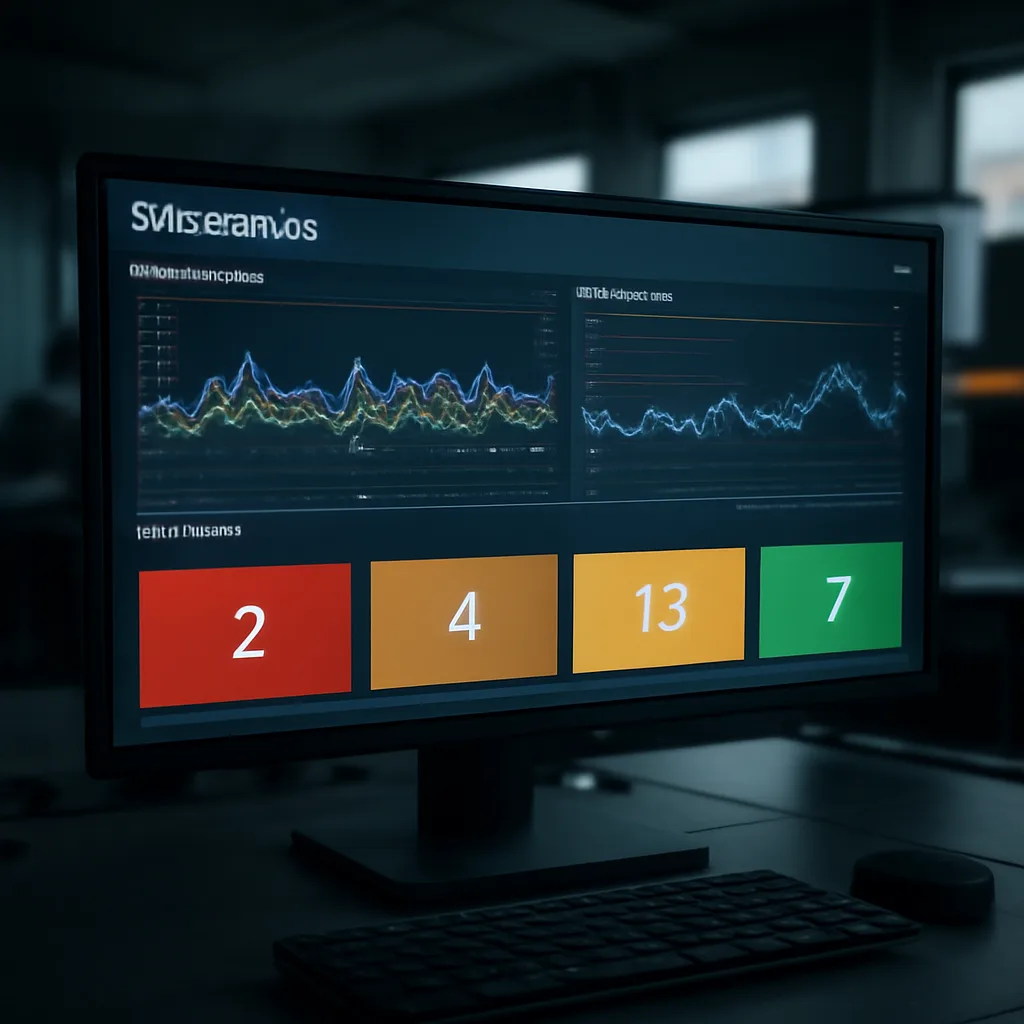
Basic logs rarely explain a slow checkout or a missing notification. Serverless monitoring problems arise when teams cannot trace one request across multiple functions and services. Combine structured logs, distributed tracing, actionable alerts, and business-level measures such as completion rate and processing delay.
7. Assuming the bill will automatically be lower
Pay-per-use pricing can be efficient for irregular workloads, but frequent invocations, excessive data transfer, provisioned capacity, and chatty integrations can produce serious serverless cost mistakes. Estimate costs using expected request volume and worst-case bursts. Set budgets, alerts, tagging, and regular reviews so unused resources and inefficient code are visible.
8. Releasing manually
Clicking through a cloud console makes environments inconsistent and increases the chance of an accidental production change. Infrastructure as code, automated tests, staged releases, and rollback plans are core serverless best practices. For broader automation guidance, compare these developer automation strategies for 2026 before choosing your delivery workflow.
9. Failing to plan for portability and recovery
Provider-specific triggers can speed development, yet they may make migration difficult. Document architectural dependencies, export essential data, test backups, and decide which services are acceptable lock-in. These steps reduce serverless computing risks when a provider changes pricing, suffers an outage, or no longer fits your product.
| Area | Warning sign | Practical response |
|---|---|---|
| Security | Shared administrator permissions | Use narrowly scoped roles and audited secrets |
| Cost | Unexplained invocation growth | Set budgets and inspect event volume |
| Reliability | Duplicate or lost messages | Use idempotency, retries, and dead-letter handling |
Teams adopting automation elsewhere can also learn from common no-code automation errors and developer automation tools worth knowing. The same principles apply: define ownership, observe outcomes, and automate repeatable controls.

Key takeaways
- Serverless removes server administration, not engineering accountability.
- Design around events, clear ownership, and measurable service boundaries.
- Prioritise least-privilege access, tracing, idempotency, and budget controls.
- Use infrastructure as code and test failure recovery before launch.
- Document provider dependencies to manage portability and resilience.
Frequently Asked Questions
What is the most common serverless mistake?
Many teams underestimate operations. They deploy functions without ownership, tracing, permission reviews, cost alerts, or recovery testing.
Is serverless always cheaper than virtual machines?
No. It can be economical for variable demand, but constant traffic, high memory use, data transfer, and inefficient invocations may increase costs.
How can I prevent serverless security mistakes?
Use least-privilege roles, managed secrets, input validation, encryption, dependency scanning, and continuous permission reviews.
How do I reduce cold-start problems?
Keep deployment packages small, remove unnecessary dependencies, select suitable runtimes, and use managed warm-capacity options where justified.
What should serverless monitoring include?
Track logs, traces, errors, latency, concurrency, queue depth, invocation volume, and business outcomes rather than infrastructure metrics alone.
When is serverless a poor fit?
It may be unsuitable for consistently running workloads, strict latency requirements, specialised hardware needs, or systems requiring extensive platform control.
A practical next step
Review one planned workload against this list before writing production code. Finding serverless computing mistakes during design is cheaper than diagnosing security gaps, deployment issues, monitoring failures, or unexpected bills after launch.