

AI cloud infrastructure is moving from a back-office concern to a board-level priority. By 2027, organisations will need more than faster chips and larger data centres: they will need systems that place models closer to users, control energy and spending, and prove how data is handled. These AI infrastructure predictions outline five developments likely to shape investment, architecture and operations over the next two years.
Table of Contents
Why AI cloud infrastructure is changing
Traditional cloud platforms were designed mainly for flexible application hosting and bursty web workloads. Generative AI adds demanding training, inference, networking and storage requirements, while latency-sensitive applications increasingly need processing outside a central region.
The result is a broader shift in AI cloud computing. Research into cloud computing developments and artificial intelligence coverage shows why businesses should treat architecture, governance and workload placement as connected decisions.
Five AI infrastructure predictions for 2027
1. Inference will move closer to the customer
Training may remain concentrated in specialist facilities, but everyday model responses will increasingly run in regional data centres, private environments and edge devices. This approach can reduce round-trip delays and help companies keep sensitive information within approved boundaries.
Architects will therefore combine public cloud, private systems and local accelerators instead of choosing one permanent destination. This distributed AI infrastructure will be especially useful for factories, retailers, healthcare providers and remote operations.
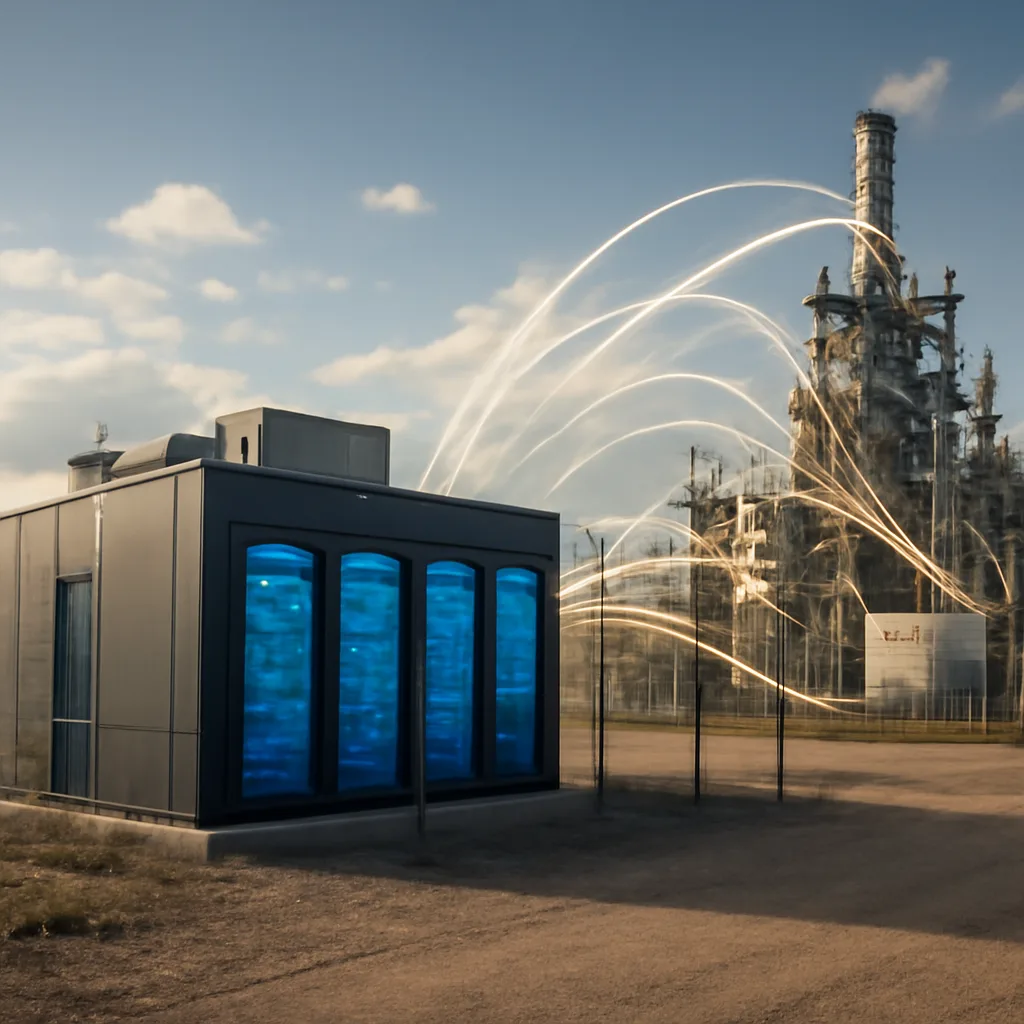
2. AI capacity will become a managed utility
Buying accelerators is only one part of the challenge. Teams must schedule scarce compute, balance memory and networking, reserve capacity for important workloads and avoid paying for idle hardware.
By 2027, intelligent cloud infrastructure will use policy-driven orchestration to select hardware, location and timing for each job. FinOps tools will also account for model size, prompt volume, storage movement and electricity usage rather than treating every cloud hour as equivalent.
3. Energy efficiency will influence architecture
Power availability, cooling and grid connections will become central to AI data center technology. Operators are likely to prioritise efficient processors, liquid cooling, workload scheduling and facilities that can respond to local energy conditions.
For buyers, the key question will not simply be “How much compute can this platform deliver?” It will be whether the platform can deliver predictable performance within financial, environmental and regulatory limits.
4. Security controls will follow the model across its lifecycle
AI workloads create new attack surfaces, including training data, model weights, retrieval stores, application prompts and automated agents. Security teams will increasingly require traceable access, encrypted data paths, isolated execution and monitoring for unusual model behaviour.
This makes governance part of the platform rather than a document created after deployment. Organisations can also compare these controls with practical lessons in avoiding developer automation mistakes and the rise of agentic automation.

5. Open interfaces will reduce platform lock-in
Companies will want to change models, accelerators and hosting locations without rebuilding every application. Portable containers, standard APIs, common observability layers and clearer data-export options should make multi-provider designs more practical.
That does not mean every workload will become completely portable. Performance tuning and proprietary services will still matter, but buyers will demand enough flexibility to negotiate costs and respond when a provider’s capacity, policy or hardware no longer fits.
| Trend | Business impact | Preparation priority |
|---|---|---|
| Regional inference | Lower latency and improved data control | Map workloads by location and sensitivity |
| Automated capacity management | Better utilisation and cost visibility | Measure compute, memory and network demand |
| Efficiency-led facilities | Greater focus on power and cooling | Include energy criteria in procurement |
| Lifecycle security | Stronger protection for models and data | Assign ownership from training to retirement |
| Open platform interfaces | More choice among clouds and hardware | Test portability before it becomes urgent |
How organisations can prepare now
Start with an inventory of models, data sources, users, latency requirements and regulatory constraints. Then classify workloads into training, batch inference, real-time inference and experimentation; each category may need a different blend of cloud, edge and private capacity.
Next, create measurable controls for cost, reliability, security and energy use. Teams planning broader automation can also review developer automation strategies, no-code automation forecasts and finance automation predictions for 2027 for related planning ideas.

Key Takeaways
- Inference is likely to spread across regions, private environments and edge locations.
- AI platforms will automate more decisions about hardware, placement and scheduling.
- Power, cooling and efficiency will become procurement issues, not only facility concerns.
- Security must cover data, models, prompts, agents and operational access.
- Open interfaces can improve negotiating power and reduce dependence on one provider.
Frequently Asked Questions
What is AI cloud infrastructure?
It is the combination of compute, storage, networking, software and controls used to train, deploy and operate AI models in cloud or connected environments.
Will AI workloads leave the public cloud?
Some workloads will move to private data centres or edge locations, but hybrid designs are more likely than a complete departure from public cloud services.
Why does inference location matter?
Running inference nearer to users can improve responsiveness, reduce data movement and support requirements around privacy or operational continuity.
How can businesses control AI infrastructure costs?
Track usage by model and application, match workloads to suitable hardware, schedule non-urgent jobs intelligently and monitor storage and network charges.
What is the future of cloud infrastructure for AI?
The future will combine centralised training, distributed inference, automated capacity management, stronger governance and more efficient facilities.
Preparing for the next infrastructure cycle
The most important cloud infrastructure trends 2027 will not be defined by one chip or provider. They will be shaped by workload location, operational efficiency, security and the ability to adapt as models change.
Review your current AI workloads this quarter, identify the applications that need edge or regional processing, and test one portable deployment. That practical step will help turn these AI cloud infrastructure predictions into a resilience and investment plan.
Explore more technology coverage
Browse Technoopia’s technology reporting, explore upcoming technology events, or listen to the latest technology podcasts. Use the site search to find related analysis; if a page reports that “the signal was lost,” return to the homepage and try again.
Company, editorial and legal information
Readers can learn about the company behind the publication, review its editorial standards, and consult its legal information and transparency practices before using or sharing its coverage.