
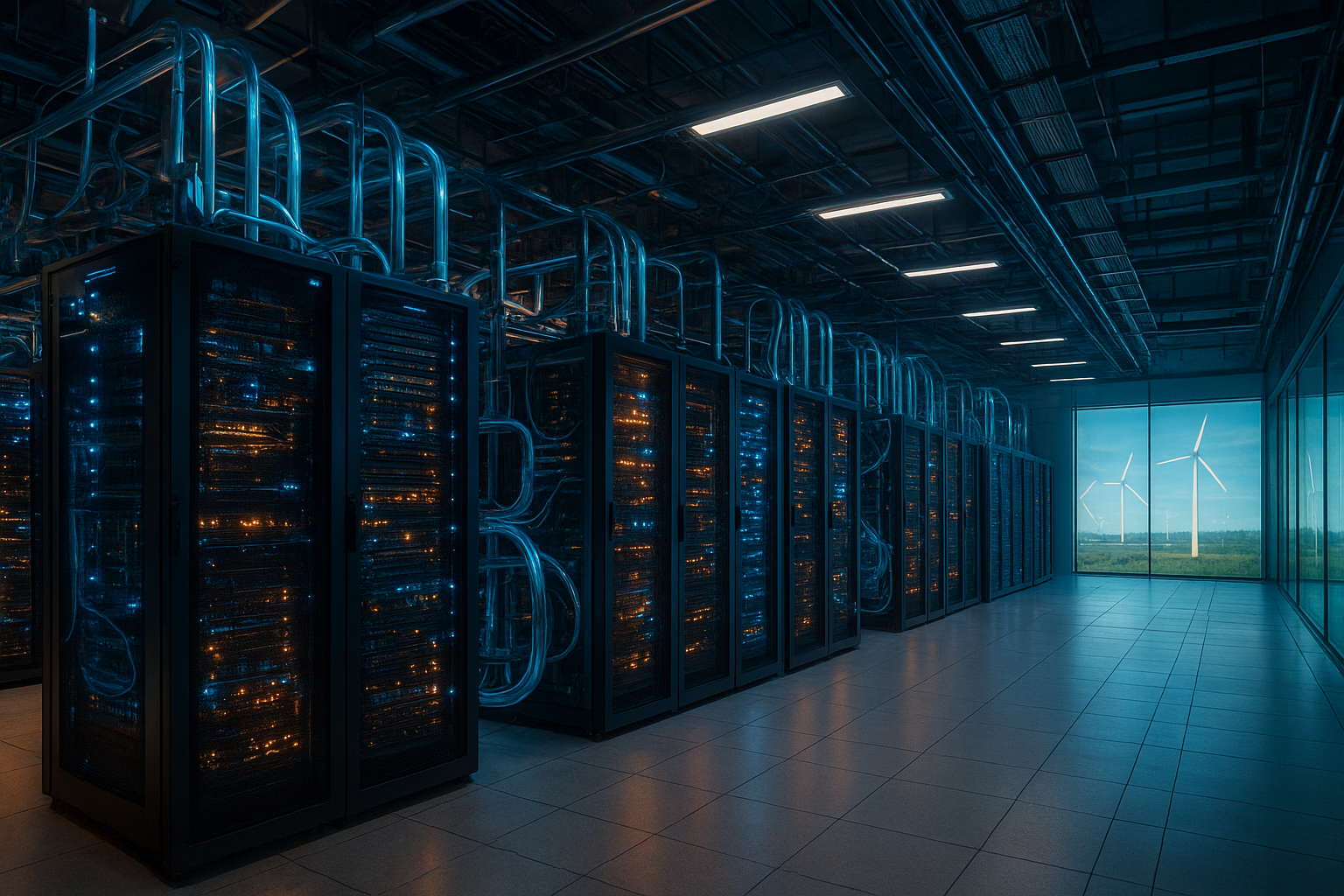
AI infrastructure in 2027 will look less like a collection of giant servers and more like a coordinated system spanning data centers, regional facilities, enterprise networks and specialized devices. The next phase will be shaped by efficiency, reliability and the ability to move models closer to the people and applications using them. These AI computing predictions are not certainties, but they reveal where investment and engineering attention are likely to concentrate.
Table of Contents
1. AI infrastructure in 2027 will become more specialized
General-purpose accelerators will remain important, but organizations will increasingly combine them with chips designed for particular workloads. Inference, training, recommendation systems and scientific computing do not place identical demands on hardware, so a single architecture may no longer be the best answer for every task.
Hardware choice will follow the workload
Expect more attention on memory capacity, data movement, cooling and software compatibility rather than raw processing claims alone. This shift could make procurement more complicated, while also encouraging open interfaces and better tools that allow teams to move workloads between different processors.
The broader AI infrastructure trends will therefore include heterogeneous systems: several types of compute working together under one management layer. Companies that plan ahead will evaluate the full cost of operating a model, not just the purchase price of an accelerator.
2. AI data centers 2027 will be more distributed
The largest facilities will continue to handle demanding training runs, but many inference workloads may be placed closer to users, factories, hospitals and offices. Regional sites can reduce response times and limit the amount of data traveling to a distant cloud location.
Central clouds and edge locations will work together
This does not mean every organization will build its own mini data center. Instead, cloud providers, colocation companies and enterprises may use a mix of central clusters, regional capacity and on-device processing. The future of AI infrastructure will depend on selecting the right location for each task, especially where privacy or latency matters.
Operators will also need stronger power, cooling and disaster-recovery plans. The most useful question will not simply be how much compute a facility contains, but whether it can deliver predictable service when demand spikes or local conditions change.
3. AI networking evolution will influence performance
As models grow and systems become more distributed, communication between processors can become as important as processor speed. High-throughput links, intelligent traffic management and better workload placement will help prevent expensive hardware from sitting idle while data moves between machines.
Networks will become part of the AI design
In 2027, infrastructure teams may design compute, storage and networking as one system rather than purchasing them independently. Network telemetry could also help identify congestion, unusual behavior and wasted capacity before those problems affect a production model.
This evolution will make network expertise more valuable within AI teams. It will also increase the importance of interoperable management software, particularly for companies operating across multiple clouds or facilities.
4. Sustainable AI infrastructure will move from aspiration to requirement
Energy use, water consumption and equipment lifecycles will receive closer scrutiny as AI deployments expand. Organizations will look for ways to improve utilization, reuse waste heat where practical and schedule flexible workloads when cleaner or less expensive electricity is available.
Efficiency will be measured across the whole system
Smaller models, quantization, caching and selective use of high-end hardware can reduce unnecessary computation. However, a lower-power chip is not automatically a greener choice if it requires more machines or creates a difficult supply-chain burden.
Standards and risk frameworks from organizations such as the National Institute of Standards and Technology can help teams assess performance and governance alongside environmental goals. Sustainability will increasingly be treated as an operational metric, not merely a public-relations message.
5. AI model deployment will become more automated and controlled
Moving a model from an experiment into daily use remains difficult because teams must manage versioning, security, data quality, monitoring and rollback procedures. By 2027, more platforms are likely to combine these functions into repeatable deployment pipelines.
Automation will not remove accountability
Better tools may allow a model to be tested, optimized and released across cloud, edge and on-premises environments with fewer manual steps. Yet organizations will still need clear ownership for access controls, audit records, incident response and decisions made by automated systems.
Security will be integrated earlier in the process, including protection against compromised models, poisoned data and unauthorized access to sensitive prompts. Guidance from CISA’s artificial intelligence resources offers a useful starting point for building that discipline.
Key Takeaways
- Specialized processors will sit alongside general-purpose AI hardware.
- AI data centers 2027 may combine central clusters with regional and edge capacity.
- Networking performance will increasingly determine how efficiently compute is used.
- Sustainable AI infrastructure will require attention to energy, cooling, utilization and equipment lifecycles.
- AI model deployment will become more automated, but governance and human accountability will remain essential.
Reader resources and publication notes
Explore the technology landscape
Readers can compare these predictions with reporting on artificial intelligence developments, cloud platforms and hardware markets.
Find related coverage
Use a publication’s navigation or search tools to locate updates on infrastructure, cybersecurity and enterprise software rather than treating any forecast as fixed.
When the signal fades
Predictions can lose relevance as costs, regulations and technical breakthroughs change. Revisit assumptions regularly and verify important claims against primary sources, including the International Energy Agency’s analysis of energy and AI.
About the publisher
Technology coverage is most useful when it explains both opportunity and limitation, giving readers enough context to make informed decisions.
Editorial approach
This article presents scenarios, not guaranteed outcomes, and avoids treating vendor announcements as independent evidence.
Legal and transparency notes
Readers should check applicable laws, contracts and organizational policies before deploying AI systems. Forecasts may change, and no prediction should replace technical testing or professional advice.
Frequently Asked Questions
What is AI infrastructure in 2027 expected to include?
It is likely to include specialized processors, advanced networking, distributed data centers, automated deployment tools and stronger energy management.
Will all AI workloads move to the edge?
No. Large training jobs will still need centralized resources, while latency-sensitive or privacy-sensitive inference may run closer to users.
Why is networking important for AI?
Models often depend on rapid communication among processors and storage systems. Congestion can reduce the value of otherwise powerful hardware.
What does sustainable AI infrastructure involve?
It involves improving utilization, reducing unnecessary computation, managing cooling and power, and considering equipment lifecycles.
Will specialized chips replace general-purpose accelerators?
Probably not. Different workloads will favor different hardware, so mixed environments are more likely than one universal processor.
What should organizations do now?
Map current workloads, measure infrastructure costs, test deployment controls and design systems that can operate across more than one environment.
Conclusion
The next stage of AI infrastructure in 2027 will be defined by coordination: between processors, networks, facilities, software teams and governance functions. Organizations that prioritize flexibility, measurable efficiency and responsible AI model deployment will be better prepared than those focused only on acquiring more compute. Start by auditing your current workloads, power requirements and deployment pipeline, then use that evidence to guide your next infrastructure investment.